Explore · historic place of the week · Oct. 21, 2026
Petersburg: a market-town square on the county line
Lincoln County's other historic square, about 12 miles north of Fayetteville as the crow flies.
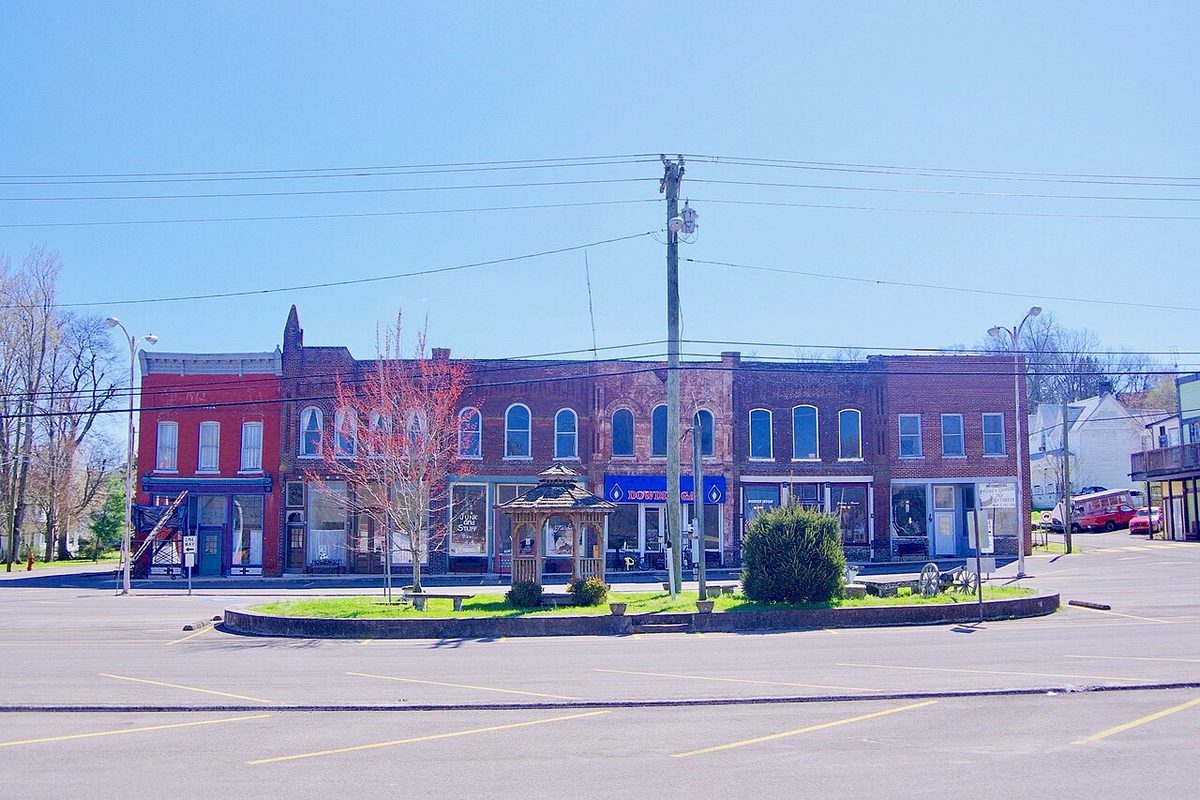
Petersburg sits right on the line between Lincoln and Marshall counties. Its town square, lined with two-story brick stores, and the streets around it are listed together on the National Register of Historic Places as the Petersburg Historic District, added on Nov. 7, 1985. The listing covers 169 historic resources on about 78 acres.
Source: NPS National Register record 85002753 · National Register nomination: Petersburg Historic District (1985, PDF)Visit
- Where
- The public square, Petersburg, TN 37144. The state marker is at 200 Southside Square (per HMdb).
- Getting in
- Public streets and square; free. The houses in the district are private homes, and the churches are active congregations. Please enjoy them from the sidewalk.
- Counties
- The district is mostly in Lincoln County and extends into Marshall County.
- How far
- About 12.2 miles from the Fayetteville courthouse square in a straight line.
- Time
- Suggestion: 20–30 minutes to walk around the square and read the marker.
- Good to know
- We found no published parking or restroom information. Check before you go.
Map data © OpenStreetMap contributors. Location: HMdb: Tennessee Historical Commission marker 3G 15 in the median of the Petersburg square (35° 19.192′ N, 86° 38.231′ W); matches the OpenStreetMap (Nominatim) town point.
How it started
North Carolina granted the land to George Bell in 1793. About 1815, Bell's heirs sold part of it to George L. Leonard, who built a home and a place of business where the public square is today, and began selling lots as early as 1833. Goodspeed's History of Tennessee, quoted in the nomination, says Leonard cleared the land, put up a cotton gin, opened a small store, and dammed Cane Creek to run a saw mill and a grist mill.
Source: National Register nomination: Petersburg Historic District (1985, PDF)The General Assembly incorporated the town on Dec. 16, 1837. The nomination gives two stories for the name: some say it was named for Petersburg, Virginia; others say it was named for an enslaved man named Peter who was one of the early settlers. It was first spelled Peterborough.
Source: National Register nomination: Petersburg Historic District (1985, PDF)A busy little market town
By the middle of the 1800s Petersburg had a blacksmith, a furniture shop, a saddle shop, a tailor, a hemp and rope factory, several mills and a tombstone business. The nomination says the first piano made in Tennessee was assembled here by William C. Butler, and that the town had eleven saloons at various times, all abolished in 1898.
Source: National Register nomination: Petersburg Historic District (1985, PDF)On March 2, 1863, Confederate scouts and Union soldiers skirmished at Petersburg. During the fight, the nomination says, Union soldiers fired on several business houses and burned the Holland Store and others.
Source: National Register nomination: Petersburg Historic District (1985, PDF)The railroad years
The Duck River Valley Narrow Gauge Railroad came through in 1879, connecting Petersburg with Fayetteville and Columbia. Most of the buildings on the square today, and many of the larger houses, went up in the two decades after it arrived.
Source: National Register nomination: Petersburg Historic District (1985, PDF)In March 1902 a bad flood hit: Cane Creek rose six feet in five minutes and destroyed the old Black neighborhood north of the railroad, along with the railroad bridge to Talley and four miles of track.
Source: National Register nomination: Petersburg Historic District (1985, PDF)By 1904 the town had about 600 people, a newspaper (the Petersburg Herald), a railway station, two drug stores, a bank, a hotel and a roller mill. Each September, from the early 1900s until 1955, the Colt Show brought buyers from stockyards in Atlanta, Louisville, St. Louis and Nashville to bid on local mules and horses.
Source: National Register nomination: Petersburg Historic District (1985, PDF)Schools and churches
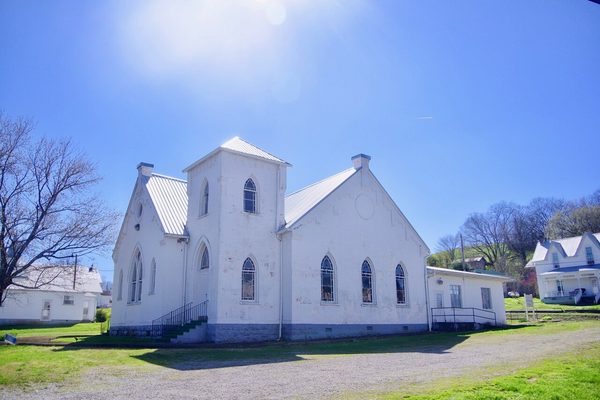
The Morgan School, a boarding school, moved to Petersburg in 1919 after townspeople spent some $75,000 to bring it. The First Presbyterian Church was organized in October 1859, and its Greek Revival chapel dates from then. The Petersburg Church of Christ on Russell Street was built in 1896, and Caldwell United Methodist Church, a small Black congregation, put up a frame chapel on Railroad Street early in the 1900s.
Source: National Register nomination: Petersburg Historic District (1985, PDF)After the trains stopped
The railroad was abandoned in 1961, and most of the businesses closed after that, according to the nomination, which was written in 1985. It still called Petersburg's square “the best intact late nineteenth and early twentieth century public square in the region.”
Source: National Register nomination: Petersburg Historic District (1985, PDF)Look for: the King's Mountain Messenger marker
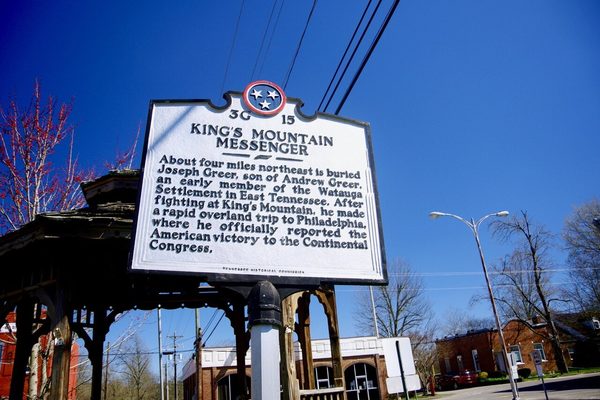
In the median of the square stands Tennessee Historical Commission marker 3G 15. It says that Joseph Greer, son of Andrew Greer of the Watauga Settlement, fought at King's Mountain and then made a rapid overland trip to Philadelphia to report the American victory to the Continental Congress. He is buried about four miles northeast, in a family cemetery on private property, so we point you to the marker instead.
Source: HMdb: Kings Mountain Messenger (THC marker 3G 15)On U.S. 431, about a quarter mile south of Church Street, another state marker (3 G 19) explains the two counties: Lincoln County, established in 1809, and Marshall County, established in 1836.
Source: HMdb: Lincoln County / Marshall County (THC marker 3 G 19)A few blocks away
At Railroad and Lane streets, a marker tells the story of Petersburg Colored Elementary School, the town's only school for African American children. It burned in 1944 and was rebuilt in 1945; its students went on to West End High School in Fayetteville, and it closed in 1965 with desegregation. The marker says the building now serves as the Petersburg Senior Citizen Building.
Source: HMdb: Petersburg Colored Elementary SchoolPhotos




Sources
- National Register nomination: Petersburg Historic District (1985, PDF)
- NPS National Register record 85002753
- HMdb: Kings Mountain Messenger (THC marker 3G 15)
- HMdb: Lincoln County / Marshall County (THC marker 3 G 19)
- HMdb: Petersburg Colored Elementary School
We point to the records; we don’t make up facts. Where a source is old, we say when it was written.
Know something we got wrong? Tell us
Have an old photo of Petersburg Historic District? Email it to us and tell us who took it. We only post photos with the owner’s OK.
Share this page: ourtownalmanac.com/tn/fayetteville/explore/petersburg-historic-district/