Explore · Campaign trail
The Road to Huntsville, 1862
In April 1862 a Union division marched south through Shelbyville and Fayetteville and took Huntsville, Alabama, on the morning of April 11. This drive follows that road today, with what the record says happened at each stop.
From Shelbyville
Shelbyville to Huntsville, Alabama
Open in Google MapsSee the stops
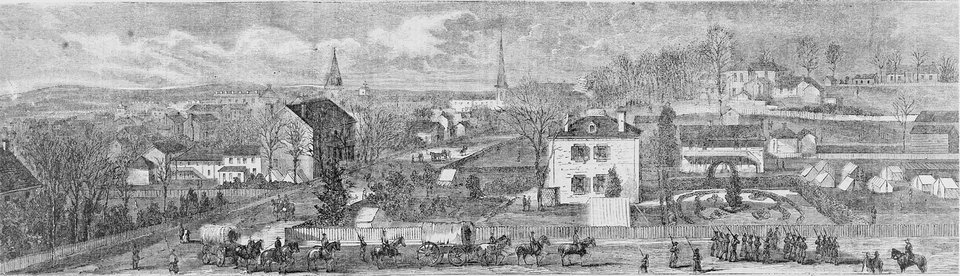
Huntsville, Alabama, from General Logan's head-quarters. Wood engraving, 1864. Photo: Library of Congress, Prints and Photographs Division (LCCN 99404219), public domain, Wikimedia Commons (cropped and resized).

Brig. Gen. Ormsby M. Mitchel's Third Division, Army of the Ohio, left Murfreesboro on April 4 and 5, 1862. The army's own Record of Events says its brigades marched “via Shelbyville and Fayetteville” to Huntsville [1]. The Huntsville Historical Review puts the force at about 8,000 men and names the goal: the Memphis & Charleston Railroad [2].
Mitchel reported that his advance guard left Fayetteville at noon on April 10 and entered Huntsville at 6 the next morning [3].
The drive from Shelbyville
Shelbyville square
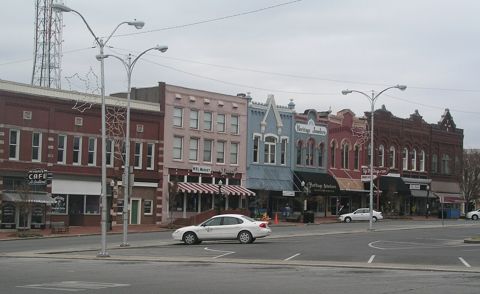

The Seventeenth Brigade reached Shelbyville on April 4, 1862, and left for Fayetteville on April 8, leaving the 42nd Indiana behind at Shelbyville. The Ninth Brigade came through on its way south too [1].
Bedford County was divided. The Tennessee Encyclopedia says it sent nearly equal numbers of soldiers to both armies, and that Shelbyville's pro-Union stance earned it the name “Little Boston” [4].
Public square, free. Allow 20 minutes.
Andrews' Raiders marker (state marker 3G 16)
2.5 miles · about 4 minutes
The state marker on TN 64 reads: “On this knoll, members of the Federal party which attempted to destroy the Western & Atlantic R.R. in 1862, assembled before starting their foray. It started with seizure of the engine “General” and ended with recapture of the engine at the Georgia state line the same day. Several of the party were subsequently hanged.” [5]
The volunteers came from three Ohio regiments, the 2nd, 21st and 33rd Ohio [6]. Their leader set out on April 7, 1862, and the engine was taken at Big Shanty, Georgia, on April 12. Six of the raiders were the first ever to receive the Medal of Honor, on March 25, 1863 [7].
Roadside marker on TN 64 (Wartrace Pike), east of the square. We have not checked parking; pull off only where it is safe and legal. Free. Allow 10 minutes.
Fayetteville square
28.6 miles · about 38 minutes
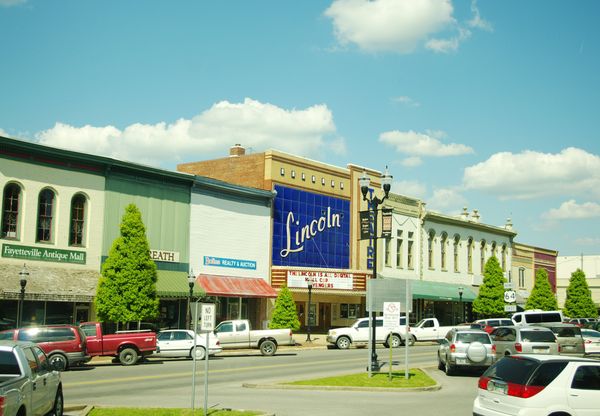

The Seventeenth Brigade marched from Shelbyville to Fayetteville on April 8 and stayed until April 14. The 15th Kentucky stayed on “as provost-guard, from April 9 to May 1” [1].
Mitchel's advance guard, Turchin's brigade with Kennett's cavalry and Simonson's battery, left Fayetteville at noon on April 10 [3].
Public square, free. Allow 20 minutes.
Huntsville Depot, Huntsville, Alabama
29.9 miles · about 39 minutes
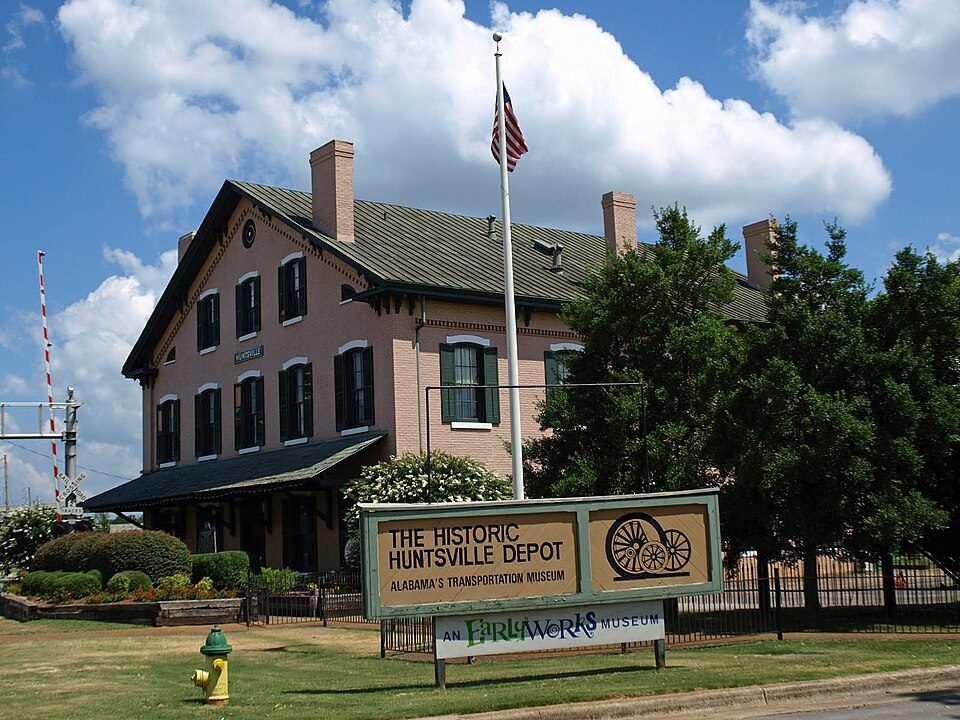

Mitchel's troops took Huntsville on the morning of April 11, 1862. He reported about 200 prisoners and 15 locomotives taken, and wrote that the move cut “the great artery of railway intercommunication between the Southern States” [3]. The Encyclopedia of Alabama says Federal troops held the town until that October, came back in November 1863 and used it as a base for the rest of the war [8].
The depot was the Memphis & Charleston's. Captured Confederate soldiers were held on its third floor: the Encyclopedia of Alabama counts 159 men held for ten days before they were sent to a prison camp in Ohio, and the city says between 159 and 200. Names, regiments and prayers they wrote on the walls survive, along with graffiti left by Union soldiers [9] [10].
Visiting: the depot building has been closed for tours since the COVID-19 pandemic, but the grounds are open. The City of Huntsville took the site back in 2024 [10] and is working on a master plan for it [11]. We found no posted hours for the building. Check the city's depot page before you go.
320 Church St. NW, Huntsville, Ala. Grounds open; building not open for tours. Allow 20 minutes on the grounds.
More of Civil War Huntsville
Same stop area, downtown Huntsville
Huntsville tells its own story best. Its visitors bureau lists downtown stops from the war years, including the Weeden House, which it says housed Union officers during the occupation, and Maple Hill Cemetery [12]. Plan that part of your day with their History Buff guide.
Use the visitors bureau guide for addresses and hours.
Drive home the same way, or on US 231 (about 56 miles, 1 hr 13 min).
What the occupation meant for enslaved people
When Union troops held this part of Tennessee and North Alabama, enslaved people came into Union lines. The Tennessee Encyclopedia lists Pulaski among the state's contraband camps, says about 20,000 “contrabands” joined the Union army as U.S. Colored Troops, and says the camps became the foundation of postwar African American neighborhoods [13].
Two U.S. Colored Troops regiments were organized at Pulaski as Alabama regiments: the 2nd Alabama Infantry (African Descent) in November 1863 and the 3rd in January 1864, later the 110th and 111th U.S. Colored Infantry [14] [15].
The Encyclopedia of Alabama says the war “freed and made citizens of the nearly 440,000 Black Alabamians born into slavery” [16].
An earlier, different story: the Creek War, 1813
Lynchburg is 16 miles from the Shelbyville square. 16.4 miles · about 25 minutes.
Forty-nine years before Mitchel's march, in October 1813, Andrew Jackson's volunteers marched from Fayetteville to Camp Beaty, today's Brahan Spring Park in Huntsville, after word of a threatened Creek attack on the town. The Alabama Historical Association marker calls it “32 miles in 5 hours.” The attack never came, and the army moved on to the Creek War of 1813–1814, part of the War of 1812 [17].
Davy Crockett moved his family to Lincoln County in 1811. In 1813 his company, part of Col. John Coffee's cavalry, “rode to Camp Batey near Huntsville,” says the Crockett panel at Camp Blount in Fayetteville (the markers spell the camp two ways) [18]. Our Lynchburg history page notes he lived in what is now Lynchburg; Moore County was not created until 1871 [19].
Lynchburg has no documented part in the 1862 march. Its tie to Huntsville is this older one.
- Camp Blount and the Crockett panel, 1371 US-231, Fayetteville
- Camp Beaty marker, Brahan Spring Park, Ivy Ave. SW at 1st St. SW, Huntsville
Camp Blount to Brahan Spring Park: 31.4 miles · about 41 minutes.
Where this story continues
- The railroad in 1864: Pulaski to Athens and back, the U.S. Colored Troops organized at Pulaski and the September 1864 raid.
- Civil War history in Shelbyville, markers and records, Union and Confederate.
- Coming from Huntsville? How close our four towns are.
- Plan your Huntsville stops with the visitors bureau History Buff guide and the city’s depot page.
The same trail, starting from our other towns: Fayetteville · Pulaski · Lynchburg
Sources
- Official Records, Record of Events, Third Division, Army of the Ohio, April 1862, reprinted in Huntsville Historical Review vol. 16 (1989)
- Huntsville Historical Review, on the April 1862 march (University of Alabama in Huntsville)
- Mitchel's report of April 11, 1862 (Official Records), reprinted by the Tennessee Valley Civil War Round Table
- Tennessee Encyclopedia, Bedford County
- Tennessee Historical Commission marker 3G 16, Andrews' Raiders (HMdb 80317)
- Ohio's Tribute to the Andrews Raiders, Chattanooga National Cemetery (HMdb 56807)
- U.S. Department of Veterans Affairs, National Cemetery Administration, Medal of Honor: Andrews' Raiders
- Encyclopedia of Alabama, Huntsville
- Encyclopedia of Alabama, Huntsville Depot and Museum
- City of Huntsville blog, The Huntsville Depot (June 22, 2025)
- City of Huntsville, Historic Huntsville Depot master plan
- Huntsville/Madison County Convention & Visitors Bureau, History Buff itinerary
- Tennessee Encyclopedia, Contraband Camps
- National Park Service, Soldiers and Sailors Database: 110th Regiment, U.S. Colored Infantry
- National Park Service, Soldiers and Sailors Database: 111th Regiment, U.S. Colored Infantry
- Encyclopedia of Alabama, Civil War in Alabama
- Alabama Historical Association marker, Camp Beaty, Brahan Spring Park, Huntsville (HMdb 105131)
- David "Davy" Crockett panel, Camp Blount, Fayetteville (HMdb 207976)
- Tennessee Encyclopedia, Moore County
Photo credits
- Huntsville, Alabama, from General Logan's head-quarters. Wood engraving, 1864. Photo: Library of Congress, Prints and Photographs Division (LCCN 99404219), public domain, Wikimedia Commons (cropped and resized).
- Town square of Shelbyville, Tennessee. Photo: Ichabod, CC BY-SA 3.0, Wikimedia Commons (resized).
- The north side of the Fayetteville square, College Street (2015). Photo: Brian Stansberry, CC BY 3.0, Wikimedia Commons (resized).
- The Huntsville Depot in 2010, with the sign it carried then. Photo: Chris Pruitt, CC BY-SA 3.0, Wikimedia Commons (resized).
Drive distances and times: OSRM routing on OpenStreetMap data, checked Oct. 27, 2026. Roads change; check before you go.