Compiled Oct. 19, 2026 from public sources only. Every statement below is attributed. Where sources disagree, both versions are given. This is a starting point, not the last word; corrections are welcome at hello@ourtownalmanac.com.
1. Short history summary
A new county, then a county seat. The Tennessee General Assembly established Bedford County on December 7, 1807, from land taken from Rutherford County. The first court met at the home of the widow Ann Payne, in what is now Moore County. (Tennessee Encyclopedia – Bedford County, Timothy C. Marsh and Helen C. Marsh)

Founding on the Duck River. Shelbyville was established in 1810 on land donated by Clement Cannon, an early resident who ran the first grist mill. The Tennessee Encyclopedia says the site was "ideally suited as a trading center, with fords on the southern and eastern ends of the town" on the Duck River. (Tennessee Encyclopedia) The town was named for Isaac Shelby, the Revolutionary War officer and first governor of Kentucky, and was incorporated in 1819. (Wikipedia – Shelbyville, Tennessee) The Bedford County Historical Society's marker on N. Spring St. says the town was established "on 100 acres of land donated by Clement Cannon (1783-1860), local manufacturer and veteran of the War of 1812" and "was formally chartered on October 7, 1819." (HMdb – Shelbyville, Tennessee marker)

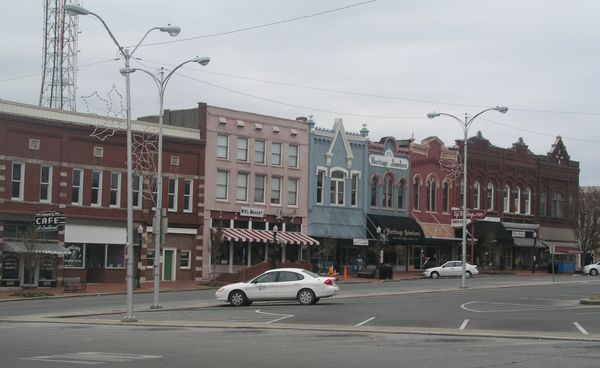
The square. The courthouse square was laid out in 1810 as a full city block with the courthouse in the middle and streets meeting at each corner. This layout, often called the "Shelbyville Square" or "Shelbyville Plan," was later copied by many county seats in the South and Midwest. (TN History for Kids – Bedford County; Gribblenation, 2021) The Shelbyville Courthouse Square Historic District was added to the National Register in 1982. (NRHP listings, Bedford County) The Tennessee Civil War Trails marker on the courthouse grounds says five courthouses have stood on the square, and that the present courthouse dates from 1935. (HMdb – Fighting in Shelbyville)
Hard years before the war. A tornado swept through Shelbyville on May 31, 1830, destroying the courthouse and causing five casualties. An Asiatic cholera epidemic followed in 1833, and cholera came back in 1866 and 1873. (Tennessee Encyclopedia)

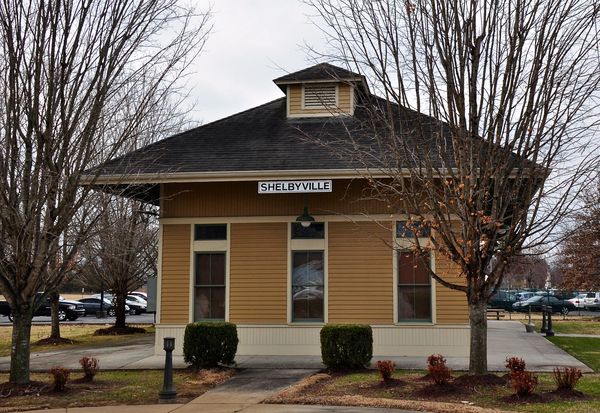
The railroad. The Nashville and Chattanooga Railroad came through in 1852 and raised the town's value as a trading center. The main line also created the railroad towns of Bell Buckle, Normandy and Wartrace. (Tennessee Encyclopedia) The Shelbyville Railroad Station on Depot Street is on the National Register. (NRHP listings)
The Civil War. The Tennessee Encyclopedia says Bedford County "was divided in its loyalties and supplied nearly equal numbers of troops to the armies of both the North and the South," and that Shelbyville's pro-Union stance earned it the title "Little Boston." Gen. Nathan Bedford Forrest was born in Bedford County in 1821 and took his middle name from it. (Tennessee Encyclopedia) Fighting reached the town on June 27, 1863, during the Tullahoma Campaign. The markers and memorials about it are listed in the Civil War history section below, Union and Confederate in the same format.
Racial terror lynchings, 1877–1950. The Equal Justice Initiative (EJI) documents 5 African American victims of racial terror lynching in Bedford County between 1877 and 1950. (EJI – Lynching in America: County Data Supplement; see also EJI summary report) EJI publishes the county total; it does not list names for those five in the county supplement. America's Black Holocaust Museum's Tennessee lynching victims memorial separately lists named victims whose places of death include Shelbyville and Bell Buckle (among others in the state). (ABH Museum – Tennessee Lynching Victims Memorial)

Mills and factories. In 1852 Gillen, Webb, and Company opened Sylvan Mills, a cotton mill on the Duck River outside town. It became Shelbyville Mills in the early 1920s and a branch of the United States Rubber Company in December 1933, with its own company store, school and homes; it made tire cord through World War II and later. The plant, by then Uniroyal, closed in 1982. (Tennessee Encyclopedia – Shelbyville Mills, Carol Roberts) In 1923 the town of 2,912 people had an electric light plant, water works, a textile factory, a hub and spoke factory, a foundry, saw mills and planing mills. (Tennessee Encyclopedia)
The Pencil City. James Raford Musgrave founded Musgrave Pencil Company in 1916, first selling Tennessee red cedar slats to pencil makers and then making pencils himself. The company says Gov. Buford Ellington named Shelbyville "The Pencil City" in the late 1950s. (Musgrave Pencil Company – History) Wikipedia notes that Shelbyville is still a site for making writing instruments. (Wikipedia) On the Musgrave grounds stands the Turner Institute Building, a former private school for African American students designed by Nashville architect Moses McKissack. (Tennessee Encyclopedia)
The courthouse burned, December 1934. The Tennessee Encyclopedia states that in 1934 the Bedford County Courthouse was destroyed a second time when a lynch mob burned it; several days of threatened violence preceded the arson; about one hundred National Guardsmen were called to protect E. K. Harris, a young Black man accused of assault; disguised as a guardsman, Harris was removed from the jail and sent to Nashville for safekeeping; and the mob burned the courthouse in retaliation for his removal. (Tennessee Encyclopedia – Bedford County) The Civil War Trails marker on the courthouse grounds says five courthouses have stood on the square and that the current courthouse (1935) almost replicates the fourth courthouse, which burned in 1934. (HMdb – Fighting in Shelbyville, marker 85714)
Sources differ on the December 19–20, 1934 riot. A Rutherford County Historical Society account (Greg Tucker, The Murfreesboro Post, reprinted 2017) names the accused as Ernest K. Harris, describes a crowd of about 500 at the square, the deployment of the Rutherford County National Guard (115th Field Artillery) from Murfreesboro, a mistrial declared by Judge T. L. Coleman, Harris being disguised in a National Guard uniform and removed with the retreating guardsmen, the burning of the courthouse and of militia vehicles, and deaths among rioters (that account says four died of wounds; contemporary press reported multiple deaths as the toll rose). It also states that Harris was later tried and convicted of rape by a Nashville jury and executed on May 22, 1936. (Rutherford County TN Historical Society – Rutherford Guard vs. Shelbyville rioters) The Tennessee Encyclopedia's shorter account does not give the death toll or the later trial and execution; both versions are given here.
The Walking Horse Celebration. The idea for the Tennessee Walking Horse National Celebration is credited to Henry Davis of Wartrace, who saw the Crimson Clover Festival in Winchester in the spring of 1939. The first Celebration was held September 7, 8 and 9, 1939, and it has been held every year since. (The Celebration – About) The Tennessee Encyclopedia says Davis presented the idea to the Shelbyville Lions Club, joined later by the Rotary Club, and that the show now runs ten days, ending the Saturday night before Labor Day. (Tennessee Encyclopedia – Walking Horse National Celebration) Shelbyville became known as the "Walking Horse Capital of the World." (Tennessee Encyclopedia) The first World Grand Champion was Strolling Jim, who is buried at the Walking Horse Hotel in Wartrace. (Tennessee Encyclopedia) Sources differ on where the first show was held: Tennessee Tourism's site says Wartrace, with a move to the present grounds in 1948, while The Walking Horse Report says the old Central High School practice field. (Tennessee Tourism; The Walking Horse Report)
Soring and the Horse Protection Act. The Tennessee Walking Horse National Celebration is held in Shelbyville. Separate from the Celebration's founding history above, federal law addresses a practice called soring. According to USDA's Animal and Plant Health Inspection Service (APHIS), soring is accomplished through substances, devices, and/or practices applied to a horse's limb that can cause physical pain, distress, inflammation, or lameness when the horse moves, producing a highly animated gait sought in some Tennessee Walking Horse and racking horse classes. (USDA APHIS – Horse Protection Act) The Horse Protection Act prohibits sored horses from participating in shows, exhibitions, sales, or auctions, and prohibits transporting sored horses to or from those events. (USDA APHIS – Horse Protection Act) APHIS enforces the Act at covered events, including attendance at the Celebration; for example, APHIS reported that at the 2014 Celebration it and Designated Qualified Persons inspected 1,075 horses and found 219 Horse Protection Act violations. (USDA APHIS – Horse Protection Program update, 2014 Celebration) In May 2024 APHIS published strengthened Horse Protection regulations aimed at ending soring at Tennessee Walking Horse shows; APHIS has since postponed the effective date of most of that final rule to December 31, 2026, citing court decisions and related litigation (including litigation involving the Tennessee Walking Horse National Celebration Association among the plaintiffs). (USDA APHIS – strengthens regulations, April 29, 2024; USDA APHIS – postponement notice; USDA APHIS – Horse Protection Act)

People from here. Shelbyville native Prentice Cooper served three consecutive terms as governor of Tennessee, which the Tennessee Encyclopedia dates 1938 to 1945; his house at 413 E. Lane St. is on the National Register. Jim Nance McCord, governor 1945 to 1949, was born in Unionville. Archibald Yell, second governor of Arkansas, grew up in Bedford County and practiced law in Shelbyville. The painter George de Forest Brush (1855–1941) was born in Shelbyville. (Tennessee Encyclopedia; NRHP listings)
Today. Shelbyville had 23,557 people in the 2020 census. (Wikipedia, citing the U.S. Census Bureau)
2. National Register of Historic Places (Shelbyville)
From the Bedford County NRHP list (33 county listings; these are in or near Shelbyville):
- Shelbyville Courthouse Square Historic District (1982): Public Square (Main, Spring, Depot and Holland Sts.)
- East Shelbyville Historic District (1990)
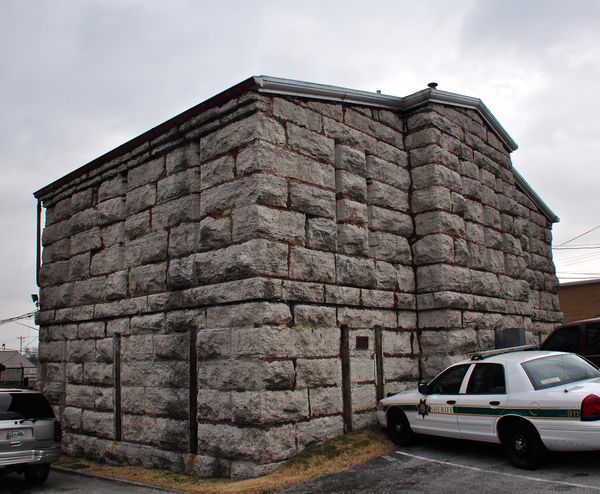
- Bedford County Jail (1975): N. Spring and Jackson Sts.
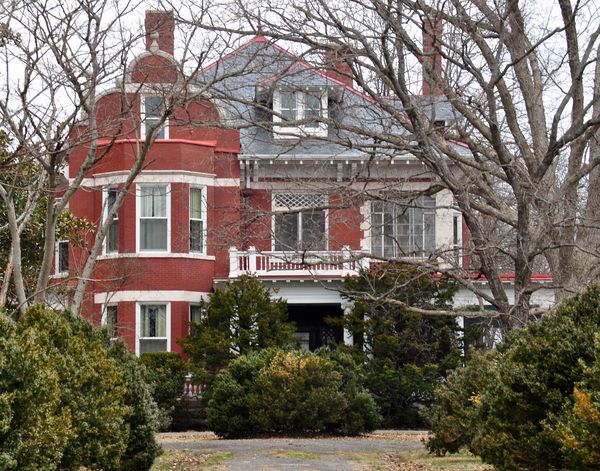
- Gov. Prentice Cooper House (1975): 413 E. Lane St.
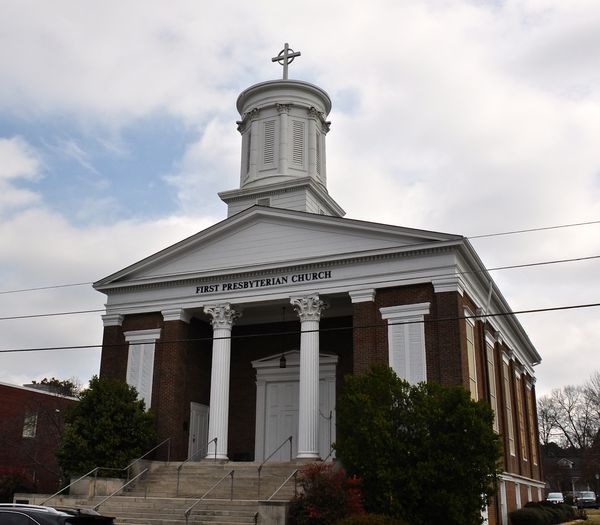
- First Presbyterian Church (1980): 600 N. Brittain St.
- Fly Manufacturing Company Building (1996): 204 S. Main St.
- Shelbyville Railroad Station (1988): Depot St.
- Shelbyville Hydroelectric Station (1990): State Route 231 at the Duck River
- Rosenwald Recreation and Community Center (2024): 516 Tillman St.
- Frierson-Coble House (1982), Winston Evans House (1989), James Gilliland House (1975), Spencer Eakin Farm (1993), Brame-Reed House (1998), Grassland Farm (1975), Jenkins Lutheran Chapel and Cemetery (1997), River Side Farmhouse (1997), Maple Dean Farm (1995), Farrar Homeplace (1990)
- Elsewhere in the county: the Bell Buckle, Normandy and Wartrace historic districts, the Walking Horse Hotel in Wartrace (1917), Raus School, and the Thompson Creek Rural Historic District.


3. Sources: where the history lives
| Source | URL | What it holds |
|---|---|---|
| Tennessee Encyclopedia – "Bedford County" (Timothy C. Marsh and Helen C. Marsh) | https://tennesseeencyclopedia.net/entries/bedford-county/ | County formation, founding of Shelbyville, the railroad towns, the Civil War, governors and notable people |
| Tennessee Encyclopedia – "Shelbyville Mills" (Carol Roberts) | https://tennesseeencyclopedia.net/entries/shelbyville/ | Sylvan Mills, Shelbyville Mills and U.S. Rubber / Uniroyal, 1852–1982 |
| Tennessee Encyclopedia – "Walking Horse National Celebration" | https://tennesseeencyclopedia.net/entries/walking-horse-national-celebration/ | How the Celebration began in 1939 |
| The Celebration (Tennessee Walking Horse National Celebration) | https://twhnc.com/home/about-the-celebration/ | The Celebration's own history |
| Musgrave Pencil Company – History | https://musgravepencil.com/pages/history-musgrave-custom-pencils | The pencil industry and the "Pencil City" name |
| HMdb – historical markers in Shelbyville | https://www.hmdb.org/m.asp?m=85714 | Civil War Trails and Tennessee Historical Commission markers on and near the square; notes the 1934 courthouse fire |
| Rutherford County TN Historical Society – Rutherford Guard vs. Shelbyville rioters (Greg Tucker / Murfreesboro Post) | https://rutherfordtnhistory.org/remembering-rutherford-rutherford-guard-unit-confronted-shelbyville-rioters/ | December 1934 riot, National Guard deployment, courthouse burning, later trial of E. K. / Ernest K. Harris |
| Equal Justice Initiative – Lynching in America county data supplement | https://eji.org/wp-content/uploads/2005/11/lynching-in-america-supplement-by-county-11-2024.pdf | Documented racial terror lynching totals by county, 1877–1950 (Bedford County: 5) |
| America's Black Holocaust Museum – Tennessee Lynching Victims Memorial | https://www.abhmuseum.org/galleries/special-exhibits/memorial-to-victims-of-lynching/tennessee-lynching-victims-memorial/ | Named Tennessee lynching victims in a memorial list (includes Shelbyville and Bell Buckle entries) |
| USDA APHIS – Horse Protection Act | https://www.aphis.usda.gov/hpa | Federal definition of soring; HPA prohibitions; enforcement and regulation status |
| Tennessee State Library & Archives (TSLA) | https://sos.tn.gov/tsla | County records on microfilm, newspapers, published county histories |
| City of Shelbyville | https://www.shelbyvilletn.org/ | City government |
| Library of Congress – Sanborn fire insurance maps | https://www.loc.gov/collections/sanborn-maps/?q=shelbyville+tennessee | Early street maps of the town (public domain) |
4. What's missing / needs an in-person archive visit
- The founding story in detail. The Historical Society marker gives 100 acres from Clement Cannon and a charter date of October 7, 1819; the original deed and charter would be in county and state records.
- Where the first Celebration was held. Sources differ (Wartrace vs. Shelbyville). The Celebration's own archives should settle it.
- African American history. The Turner Institute and the Rosenwald Recreation and Community Center are a start. Church records, school records and family histories need in-person review.
- The mills and pencil factories. Oral histories from people who worked at Shelbyville Mills and the pencil plants aren't online.
- Photographs of the square over time. The library, the county historian and private collections would have to be visited.